How to Calculate Concrete in Cubic Yards
Calculate slab concrete from feet and inches, convert cubic feet to yards, and check a 20-by-12-foot example with the allowance shown separately.
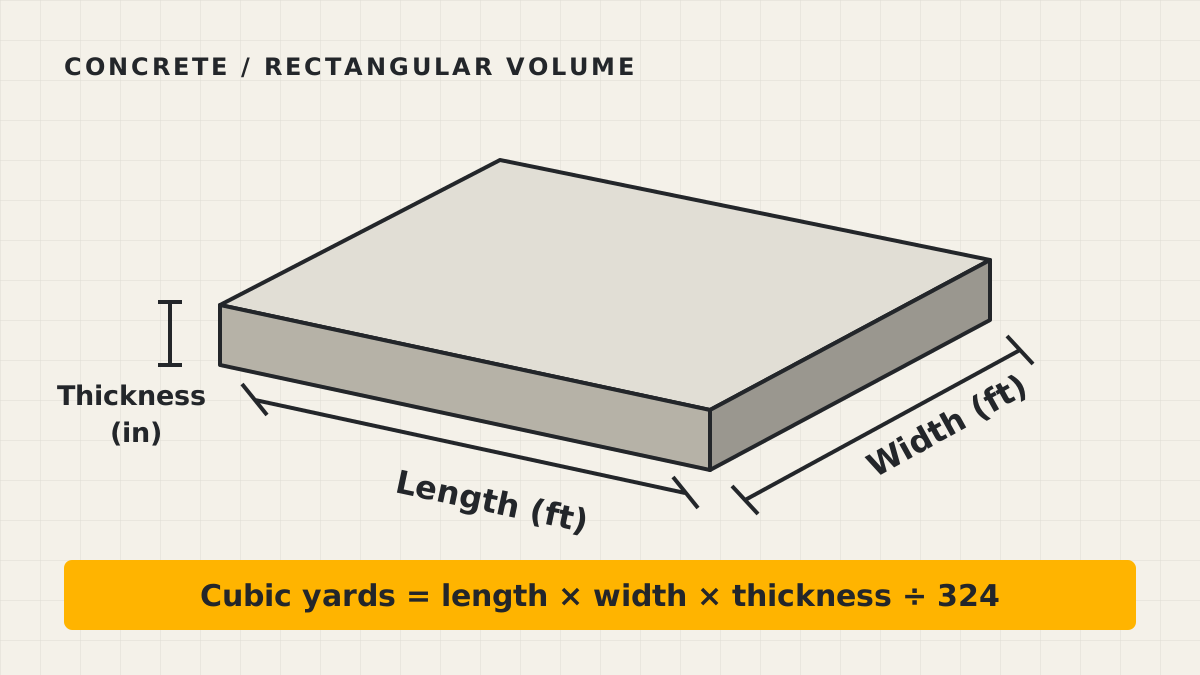
For a rectangular slab, cubic yards = length in feet × width in feet × thickness in inches ÷ 324. A 20 ft × 12 ft slab at 4 inches thick contains 2.96 cubic yards before allowance, or 3.26 cubic yards with an example 10% allowance.
That estimates the space to fill. It does not choose a slab thickness, concrete mix or reinforcement specification.
Why divide by 324?
There are 12 inches in a foot and 27 cubic feet in a cubic yard. With length and width already in feet, divide the inch thickness by 12, then divide the resulting cubic feet by 27: 12 × 27 = 324.
cubic feet = length (ft) × width (ft) × [thickness (in) ÷ 12]
cubic yards = cubic feet ÷ 27
If every dimension is already in feet, divide the product by 27, not 324. If every dimension is in inches, divide by 46,656. Label the units before multiplying.
Worked example: 20 ft × 12 ft × 4 in
| Step | Calculation | Result |
|---|---|---|
| Surface area | 20 × 12 | 240 sq ft |
| Measured volume | 240 × (4 ÷ 12) | 80 cu ft |
| Convert to yards | 80 ÷ 27 | 2.96296 yd³ |
| Example 10% allowance | 2.96296… × 1.10 | 3.25926 yd³ |
| Displayed planning quantity | Round the final result | 3.26 yd³ |
Keep 4 ÷ 12 unrounded during the calculation; using 0.33 feet for the thickness understates the volume. A feet-and-inches conversion example helps when the length or width also includes inches.
Open the US concrete calculator, choose a slab and use one unit for all dimensions. For this example, select inches and enter 240 × 144 × 4. The calculator shows the measured volume and adds its built-in 10% allowance separately. Do not add another 10% to that adjusted result.
How much difference does thickness make?
These are quantity comparisons for the same 20 ft × 12 ft area, not recommended slab designs.
| Specified thickness | Measured cu ft | Measured yd³ | With example 10% allowance |
|---|---|---|---|
| 4 in | 80 | 2.96 | 3.26 yd³ |
| 5 in | 100 | 3.70 | 4.07 yd³ |
| 6 in | 120 | 4.44 | 4.89 yd³ |
A thicker edge or footing needs its own volume. Add only the portion below the slab already counted, so the overlapping concrete is not counted twice.
Footings, columns and separate pours
A rectangular footing uses length × width × depth. A round column uses π × (diameter ÷ 2)² × height, with every dimension in the same unit. Calculate separate pieces, add their volumes, then apply the allowance once.
For an L-shaped slab, split the plan into rectangles. For hollow structures, subtract the void; the outside dimensions alone overstate the concrete.
Before ordering
Measure the forms and excavation at several points. Uneven subgrade, over-excavation and placement losses can change the actual requirement. Agree an allowance, order increment and delivery minimum with the supplier; 10% is a planning assumption here, not a guarantee for every job.
Ask the project designer or supplier to confirm the required mix and placement arrangements. If buying bags, take the volume into the 40, 60 and 80 lb bag comparison and use the yield on the exact product.
The unit relationships come from NIST's general tables of US customary units. The worked quantities above are geometric calculations using the stated example dimensions.
Use the related US tools
Check the next part of your estimate
How Many Concrete Bags? 40, 60 and 80 lb Quantities
Compare 40, 60 and 80 lb concrete bag yields, bags per cubic yard, and a 10-by-6-foot slab example. Add an allowance once, then round up.
Feet and Inches to Decimal Feet: Formula and Examples
Convert 8 ft 6 in to 8.5 feet, handle fractional inches, and convert decimal feet back to feet and inches without confusing inches with decimals.
How to Calculate Square Footage: Rooms, Walls and Cutouts
Calculate square feet from feet and inches, work through an L-shaped room, subtract openings, and turn measured area into a material order.
Concrete Ordering Checklist: Quantities, Delivery and Costs
Prepare a US concrete order with a volume worksheet, allowance check, supplier questions and delivery details. Copy the checklist into your job notes.
Concrete for Round Forms and Post Holes: Yard and Bag Guide
Estimate concrete for cylindrical forms and post holes from diameter and fill depth, subtract post displacement, and convert the volume into bags.