How Many Concrete Bags? 40, 60 and 80 lb Quantities
Compare 40, 60 and 80 lb concrete bag yields, bags per cubic yard, and a 10-by-6-foot slab example. Add an allowance once, then round up.
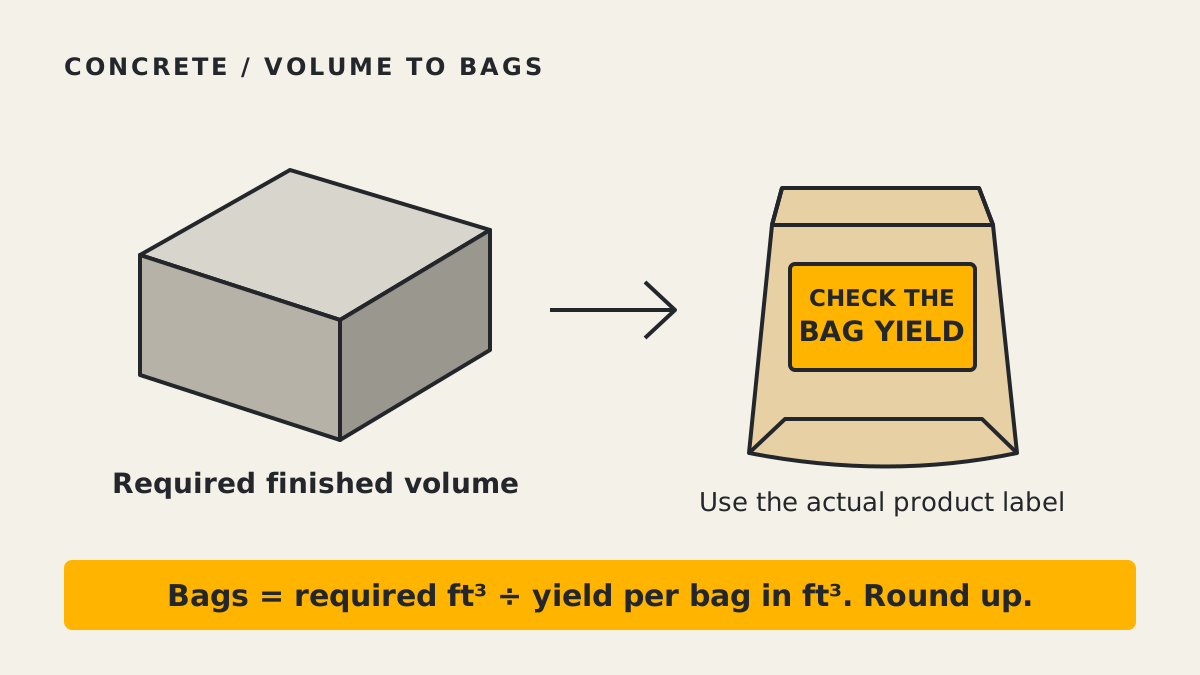
One cubic yard takes about 45 bags at 80 lb, 60 bags at 60 lb, or 90 bags at 40 lb, using the approximate yields for QUIKRETE Concrete Mix No. 1101 and before allowance. For a different mix, use its labeled yield. Bag weight alone does not tell you the finished volume.
For any project: bags = volume including allowance ÷ yield per bag, rounded up to a whole bag.
Compare common US bag sizes
The manufacturer's Concrete Mix No. 1101 data sheet gives these approximate yields. The calculated counts refer to that product, not every concrete, mortar or cement bag of the same weight.
| Bag size | Approximate yield | Bags for 27 cu ft (1 yd³), no allowance | Bags for 29.7 cu ft (1 yd³ + 10%) |
|---|---|---|---|
| 40 lb | 0.30 cu ft | 90 | 99 |
| 60 lb | 0.45 cu ft | 60 | 66 |
| 80 lb | 0.60 cu ft | 45 | 50 |
Bag counts are rounded up after the allowance. At 80 lb, 49.5 bags means buying 50; the rounding itself supplies the remaining half bag.
Worked example: a 10 ft × 6 ft × 4 in slab
- Calculate the volume without rounding the thickness:
10 × 6 × (4 ÷ 12) = 20 cu ft. - Apply an example 10% allowance:
20 × 1.10 = 22 cu ft. - Divide 22 by the selected product's yield.
- Round up once at the end.
| Bag size and assumed yield | Calculation for 22 cu ft | Whole bags |
|---|---|---|
| 40 lb at 0.30 cu ft | 22 ÷ 0.30 = 73.333… | 74 |
| 60 lb at 0.45 cu ft | 22 ÷ 0.45 = 48.888… | 49 |
| 80 lb at 0.60 cu ft | 22 ÷ 0.60 = 36.666… | 37 |
Without the allowance, the 80 lb result would be 34 bags. The difference explains why two estimates for the same slab can disagree.
In the US concrete calculator, choose a slab, select inches, and enter 120 × 72 × 4. Choose premix bags to see its 80 lb estimate including 10% allowance. It does not currently offer a 40 or 60 lb selector; use the volume and the formula above for those products.
Avoid three common counting errors
- Adding the allowance twice. If a result already includes 10%, do not multiply that result by 1.10 again.
- Rounding too early. Keep the full calculated volume until the final bag count. A rounded cubic-yard display can shift an order by a bag.
- Confusing cement with premixed concrete. A cement-only bag is an ingredient. Its weight cannot use the finished-concrete yields in this table.
For mixed feet-and-inches measurements, convert each length first. If your supplier quotes in yards, calculate the volume in cubic yards before comparing supply options.
Bags or ready-mix?
For the example, 37 eighty-pound bags contain 2,960 lb of dry product before mixing water. That is a handling and delivery planning figure, not a vehicle loading recommendation. Check delivery arrangements and lifting equipment, and compare the full cost of bags, equipment, labor and ready-mix access.
This estimate does not specify slab thickness, strength, water addition or curing. Confirm the selected mix's current yield and instructions, the required project specification, and an allowance suited to actual site conditions before buying.
Use the related US tools
Check the next part of your estimate
How to Calculate Concrete in Cubic Yards
Calculate slab concrete from feet and inches, convert cubic feet to yards, and check a 20-by-12-foot example with the allowance shown separately.
Feet and Inches to Decimal Feet: Formula and Examples
Convert 8 ft 6 in to 8.5 feet, handle fractional inches, and convert decimal feet back to feet and inches without confusing inches with decimals.
Ready-Mix vs Bagged Concrete: Compare the Whole Job Cost
Compare bagged and delivered concrete using volume, bag yield, labor, equipment and supplier fees. Includes a worked 1-cubic-yard cost worksheet.
Concrete for Round Forms and Post Holes: Yard and Bag Guide
Estimate concrete for cylindrical forms and post holes from diameter and fill depth, subtract post displacement, and convert the volume into bags.