Ready-Mix vs Bagged Concrete: Compare the Whole Job Cost
Compare bagged and delivered concrete using volume, bag yield, labor, equipment and supplier fees. Includes a worked 1-cubic-yard cost worksheet.
Compare the total cost to get suitable concrete placed, not just the bag price against the price per cubic yard. Bagged concrete adds handling, mixing time and equipment. A ready-mix quote can include minimum-load charges, delivery, waiting time or other fees.
There is no universal volume where one becomes cheaper. Access, crew capacity, supplier terms and the specified mix can change the answer. Use a current local quotation for each option.
Start with one quantity for both options
Calculate the measured volume using the US concrete calculator or the cubic-yard formula. Separate measured volume from the allowance so both options cover the same amount of work.
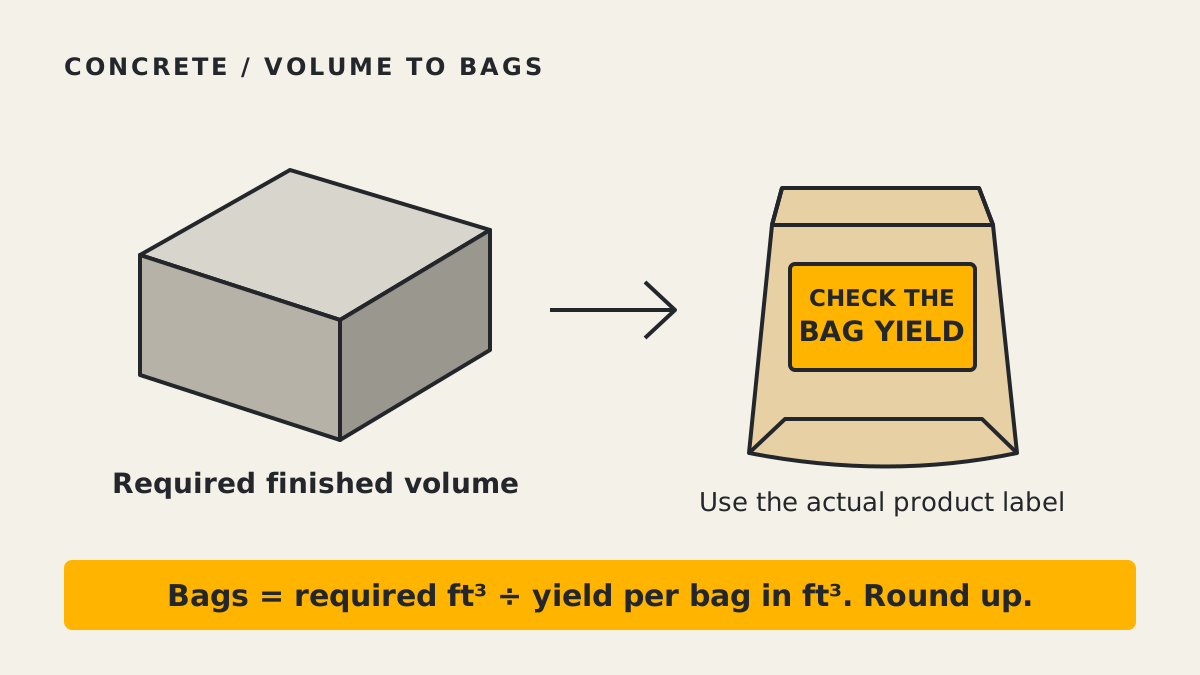
One cubic yard equals 27 cubic feet. At a product yield of 0.60 cubic feet, that needs 45 bags before allowance. With an illustrative 10% allowance, 29.7 cubic feet requires 49.5 bags, rounded up to 50 bags. Those bags contain 4,000 pounds of dry mix in total, so handling is a meaningful part of the comparison.
The 0.60-cubic-foot figure comes from the QUIKRETE No. 1101 product sheet. Use the stated yield of the product you are actually buying.
Build two comparable totals
| Cost item | Bagged option | Ready-mix option |
|---|---|---|
| Concrete | Rounded bag count × local bag price | Supplier's billable yardage × quoted rate |
| Delivery | Store delivery or collection cost | Delivery and any minimum-load fee |
| Equipment | Mixer rental, transport and cleaning | Pump or other placing equipment if required |
| Labor | Unloading, carrying, mixing and placement | Receiving, placement and agreed crew time |
| Extras | Tax, consumables and unused material | Waiting time, washout arrangements, tax and quoted surcharges |
Keep costs common to both options, such as agreed finishing work, consistent. Otherwise one side can appear cheaper simply because some work was omitted.
Example worksheet: one measured cubic yard
These prices and hours are invented arithmetic examples, not US market rates. Replace every price and duration with your supplier quotation and job estimate. Both options below cover a measured yard plus the example allowance.
| Item | Bagged example | Delivered example |
|---|---|---|
| Concrete | 50 bags × $7 = $350 | 1.10 yd³ × $180 = $198 |
| Delivery or load charge | $40 | $150 |
| Mixing equipment | $70 | $0 |
| Handling and placing labor | 5 person-hours × $35 = $175 | 3 person-hours × $35 = $105 |
| Example subtotal | $635 | $453 |
Tax, pump hire and other site-specific costs are excluded from this example. A supplier may bill a minimum quantity or use order increments, so 1.10 yards might not be an available billable quantity. Request a written total rather than relying on the headline yard rate.
Check whether each option suits the work
Before comparing price, confirm that both options meet the project's mix requirements. A matching strength number alone does not establish that two mixes suit the same exposure or placement conditions. NRMCA's ordering guidance describes the information a purchaser and producer need to agree.
For bagged work, plan where material will be stored, how it reaches the mixer and whether the available crew and equipment can sustain the required placement. For delivered work, confirm vehicle access, discharge reach, timing and any equipment needed between the truck and the forms.
Questions to ask a ready-mix supplier
- What quantity will you bill, and is there a minimum-load charge?
- Does the quote include delivery, tax and all stated surcharges?
- How long is included for unloading, and what does extra time cost?
- What site access and washout arrangements do you require?
- What notice is needed for changes or cancellation?
Record those answers with the quantity estimate using the concrete ordering checklist. The cheaper material price is useful only if the delivery and placement plan works for the job.
Use the related US tools
Check the next part of your estimate
How Many Concrete Bags? 40, 60 and 80 lb Quantities
Compare 40, 60 and 80 lb concrete bag yields, bags per cubic yard, and a 10-by-6-foot slab example. Add an allowance once, then round up.
How to Calculate Concrete in Cubic Yards
Calculate slab concrete from feet and inches, convert cubic feet to yards, and check a 20-by-12-foot example with the allowance shown separately.
Concrete Ordering Checklist: Quantities, Delivery and Costs
Prepare a US concrete order with a volume worksheet, allowance check, supplier questions and delivery details. Copy the checklist into your job notes.