Concrete for Round Forms and Post Holes: Yard and Bag Guide
Estimate concrete for cylindrical forms and post holes from diameter and fill depth, subtract post displacement, and convert the volume into bags.
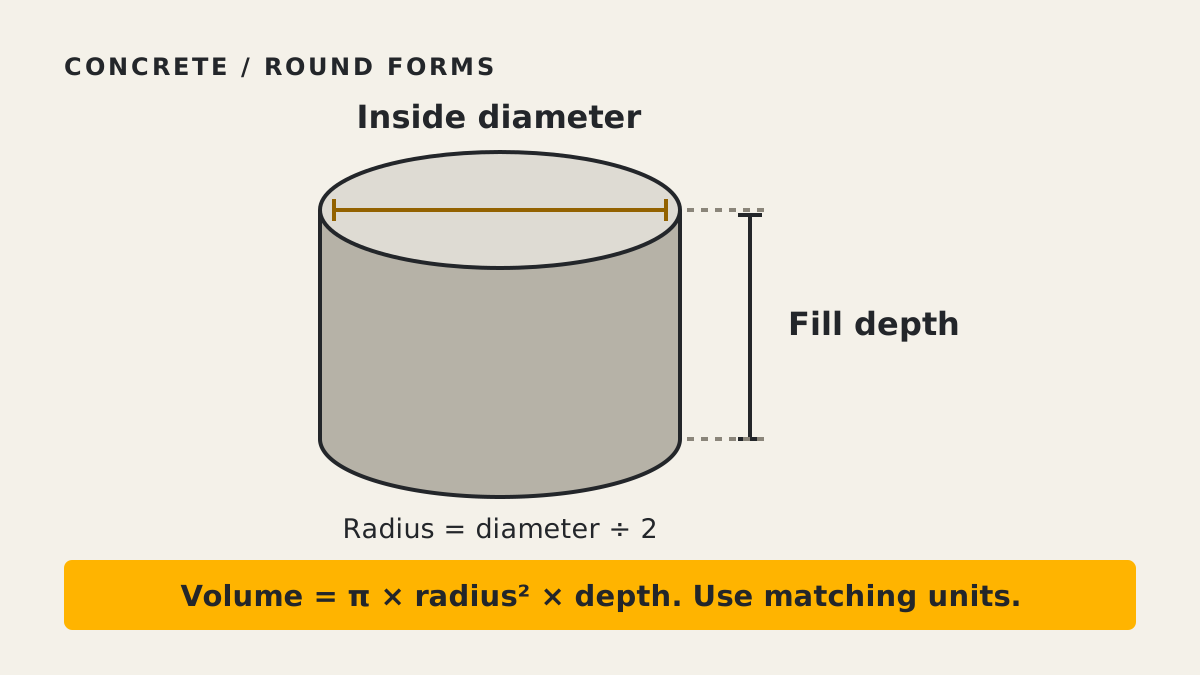
For a round form, concrete volume in cubic feet = π × diameter² × fill depth ÷ 576, with diameter in inches and fill depth in feet. A 12-inch-diameter form filled 3 feet deep holds approximately 2.356 cubic feet, or 0.0873 cubic yard, before any allowance or post displacement.
This calculation measures the space to fill. Use the dimensions specified for your project; it does not determine a safe footing diameter, frost depth or structural design.
Measure the concrete space
Use the form's inside diameter. For an excavated hole, measure the actual hole: widening and irregular sides can make it larger than the nominal auger diameter. Measure the depth that will contain concrete, excluding any separate gravel layer.
Convert diameter to feet, divide by two to get the radius, then use π × radius × radius × depth. The shortcut above combines those conversions. To get cubic yards, divide cubic feet by 27. The construction unit converter can handle that last conversion.
Round-form volume reference
The table assumes a straight cylinder, a 3-foot concrete fill depth and no post inside. Dimensions are examples, not footing specifications. Calculations use unrounded values; displayed volumes are rounded.
| Inside diameter | Fill depth | Cubic feet | Cubic yards | 80 lb bags, no allowance |
|---|---|---|---|---|
| 8 inches | 3 feet | 1.047 | 0.0388 | 2 |
| 10 inches | 3 feet | 1.636 | 0.0606 | 3 |
| 12 inches | 3 feet | 2.356 | 0.0873 | 4 |
| 16 inches | 3 feet | 4.189 | 0.1551 | 7 |
Bag counts assume 0.60 cubic feet per 80 lb bag, the approximate yield of QUIKRETE Concrete Mix No. 1101. Check the actual mix label: different products can have different yields.
Subtract the space occupied by a post
For a square post, displaced volume is actual width in feet × actual thickness in feet × embedded concrete length in feet. For a round post, use the same cylinder formula as the hole, with the post's diameter.
As a geometry example, a 3.5-inch-square post passing through the full 3-foot concrete depth displaces 3.5 × 3.5 × 36 ÷ 1728 = 0.2552 cubic feet. In the 12-inch hole above, the net volume is 2.3562 − 0.2552 = 2.1010 cubic feet.
An illustrative 10% allowance makes that 2.3111 cubic feet. At 0.60 cubic feet per bag, 2.3111 ÷ 0.60 = 3.852, so round up to 4 bags. If concrete extends below the post, subtract only the part of the post actually within the concrete.
Buying for several holes
Add the net volumes before applying one allowance and rounding the total bag count. For six identical holes from the example, 6 × 2.1010 × 1.10 ÷ 0.60 = 23.111, which rounds to 24 bags. Keep some margin for holes that differ from your measurements, and agree it against site conditions rather than assuming every excavation is identical.
Do not automatically double an allowance already included by a calculator. Our concrete bag reference explains other package sizes. For planning the pour, use the concrete ordering checklist.
Common questions
Do I use radius or diameter?
The standard cylinder formula uses radius. Halve the diameter first. Using diameter as radius makes the calculated volume four times too large.
Does a tapered or flared base use the same formula?
No. The table assumes straight sides. Calculate each shape separately from its specified geometry or use the form manufacturer's published volume, then add the parts without counting overlapping space twice.
Can I pour the bag dry into the hole?
Volume alone cannot answer that. Follow the instructions for your particular product. The cited No. 1101 mix specifies mixing with water before placement; instructions for a different post-setting product may differ.
Use the related US tools
Check the next part of your estimate
How Many Concrete Bags? 40, 60 and 80 lb Quantities
Compare 40, 60 and 80 lb concrete bag yields, bags per cubic yard, and a 10-by-6-foot slab example. Add an allowance once, then round up.
Ready-Mix vs Bagged Concrete: Compare the Whole Job Cost
Compare bagged and delivered concrete using volume, bag yield, labor, equipment and supplier fees. Includes a worked 1-cubic-yard cost worksheet.
Concrete Ordering Checklist: Quantities, Delivery and Costs
Prepare a US concrete order with a volume worksheet, allowance check, supplier questions and delivery details. Copy the checklist into your job notes.